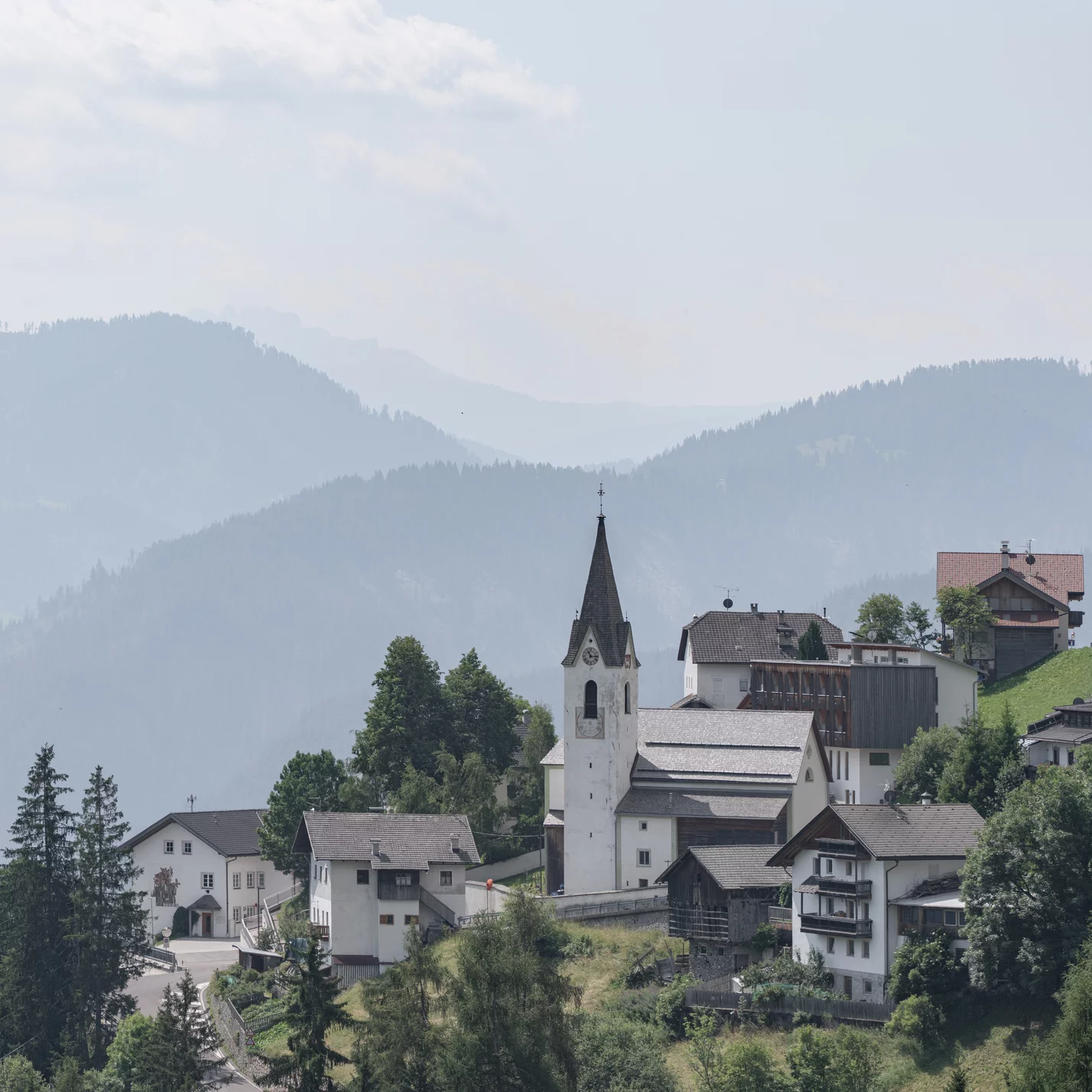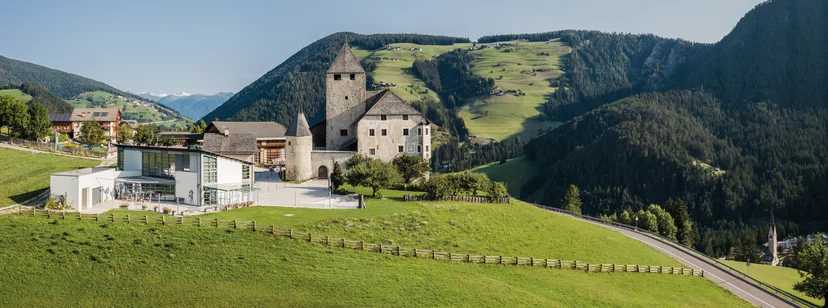
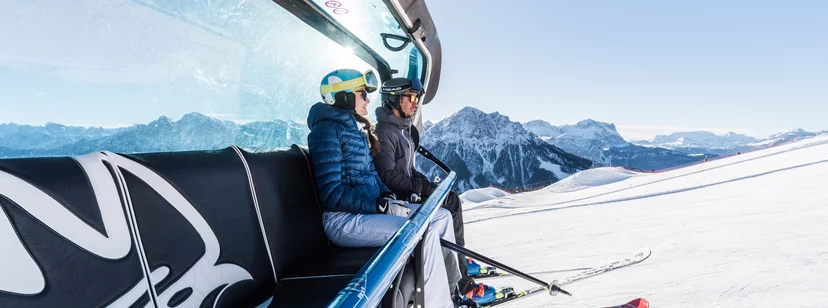
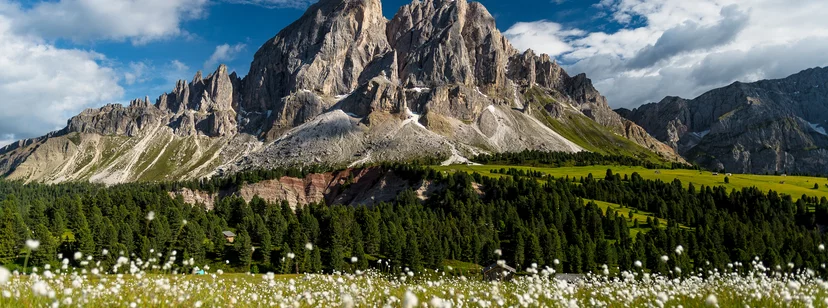

Pieve di Marebbe (in Ladin La Pli, in German Enneberg-Pfarre) is a village nestled in the Dolomites of South Tyrol, known for its network of small rural hamlets called “viles.” A vila is the typical Ladin settlement: a cluster of farmsteads gathered in a single location, where in the past several farming families lived side by side, sharing common facilities such as a small square, a fountain, a bread oven, and often a chapel.
These Alpine communities, which originated centuries ago, embody the architectural and social traditions of the Marebbe valley. Visiting them today means stepping back in time, experiencing the authenticity of Ladin culture and the strong sense of community of the past, set against the backdrop of a spectacular Dolomite landscape.


At the entrance to the valley, towards Val Badia, lie Longega and Framacia, two viles that developed along the stream as centers of mills, craftsmanship, and inns. In Longega, as many as two chapels were built; both villages experienced alternating fortunes over the centuries due to floods and other natural disasters. In nearby Framacia, also dedicated to craftsmanship, sawyers and millers have left traces of their presence in local place names.
Moving up towards Pieve di Marebbe, the landscape is dotted with historic viles. La Pli (Pieve) itself originated around the parish church with just two farmsteads (masi), forming the nucleus from which the village later developed. Shortly afterwards comes Brach, with four masi and a castle inhabited by the nobles of Prack until 1682. Brach was rebuilt in traditional style after a fire in 1958. Further on lies Pliscia, a village of six masi, known for its church and the old sacristan’s house. Above Pliscia sits Ciaseles, a large vila of seven closely clustered masi: a fire in 1883 destroyed it, and it was rebuilt while preserving its original compact layout. Even higher, at over 1,500 meters, Frontü dominates the valley with its three centuries-old masi; the name of the vila lives on in the surname Frontull, typical of the area.
In the surrounding area there are also smaller viles such as La Munt, Corterëi, and Peraforada. La Munt (“the mountain”) is the last vila towards Val Pusteria where Ladin is still spoken: only two masi and an isolated chapel mark the linguistic boundary with neighboring German-speaking settlements. Corterëi (Corterei), with just two masi, was the residence of a Marebbe judge who later became a nobleman, while Peraforada (Palfrad), also composed of two masi, hosted an old inn along the former road to Badia, which closed after the opening of the modern valley road.
Not far from Pieve are Biëi Defora and Biëi Daéte (“Biei outside” and “inside”), viles that each originated around a single farm later subdivided. The painter Nikolaus Pedevilla spent his childhood in Biei Defora. Biei Daéte, on the other hand, gave rise to the surname Willeit, still common in the valley today. A little further on lies Alnëi, composed of three masi; although some newer houses have been added, this vila retains its rural character.
Other viles contain remarkable historical evidence. Plazores developed around an old watermill and today consists of just two masi. Ćianoré and La Costa, two small neighboring settlements, originated from isolated farms over 500 years ago, and their names survive in some ancient local surnames. Nearby, the farmhouse Col sot Brach (known as Sach) was built around 1560 as a reward for the services of a court messenger and was one of the four large farms responsible for collecting tributes for Castel Badia; it still preserves a centuries-old oven and granary. Curt (Corte) is instead a vila of five masi with a small church, known for its 17th-century houses with original portals and frescoes, such as the Maier house, one of the oldest in the area.
On the higher slopes are tiny yet charming settlements. Matlogn originated from a single farm later divided into three holdings (overlooked by the old Majun house), while further up are the isolated farms of Col and Parü. Even higher we find Rara and Miscí, among the highest viles (up to 1,570 m): a few masi surrounded by pastures and forests, with a chapel watching over these remote communities. Finally, villages such as Soröa, Tlea, and Pre consist of just two or three masi each (each with its own chapel) and preserve an atmosphere from another era, unchanged over the centuries.
Towards Passo Furcia, the landscape is dotted with larger viles, such as Costamesana (six masi), which benefited from the opening of the pass road, Rü (Ruis), rebuilt after a fire in 1966, and Fordora, a classic agricultural village with seven masi scattered across the slope.
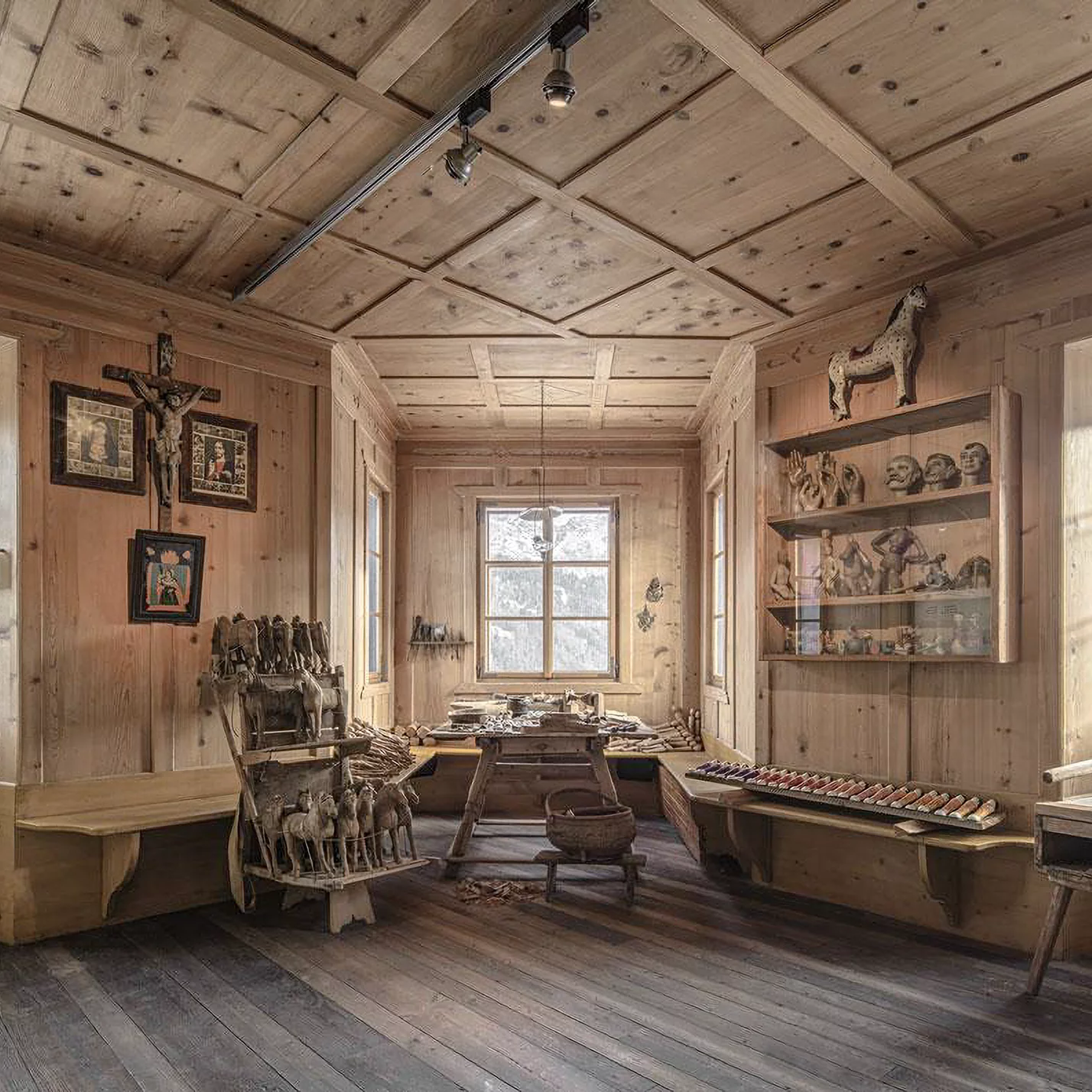
Among the highest viles is Frena, at 1,660 meters above sea level, with its eight masi and even a historic carpentry workshop still in operation. Les Ćiases (four masi) stands out for its preserved centuries-old barn and for having given rise to the surname Elliscase, while Furćia, near the pass of the same name, has grown with modern tourism while still maintaining a chapel like the ancient viles.
Costa and Ras also testify to the evolution of the area: the former, composed of five masi, has been repeatedly affected by fires, while the latter has seen numerous new houses built thanks to the tourism boom. Yet both still preserve original buildings and an intact Alpine charm. Finally, Val dla Tor (“valley of the tower”) lies secluded and quiet: its name recalls its former subordination to the Bishop of Bressanone, and even today its six masi dot one of the most unspoiled corners of Marebbe. Together, these viles form a unique mosaic of culture, architecture, and landscape, a true journey through time for anyone visiting this corner of the Dolomites.


“Finanziato tramite Avviso pubblico per la presentazione di Proposte di intervento per la rigenerazione culturale e sociale dei piccoli borghi storici, da finanziare nell’ambito del PNRR, Missione 1 "Digitalizzazione, innovazione, competitività e cultura", Componente 3 "Turismo e Cultura 4.0" (M1C3), Misura 2 “Rigenerazione di piccoli siti culturali, patrimonio culturale, religioso e rurale”, Investimento 2.1 “Attrattività dei borghi”, finanziato dall’Unione europea - NextGenerationEU e gestito dal Ministero della Cultura”.