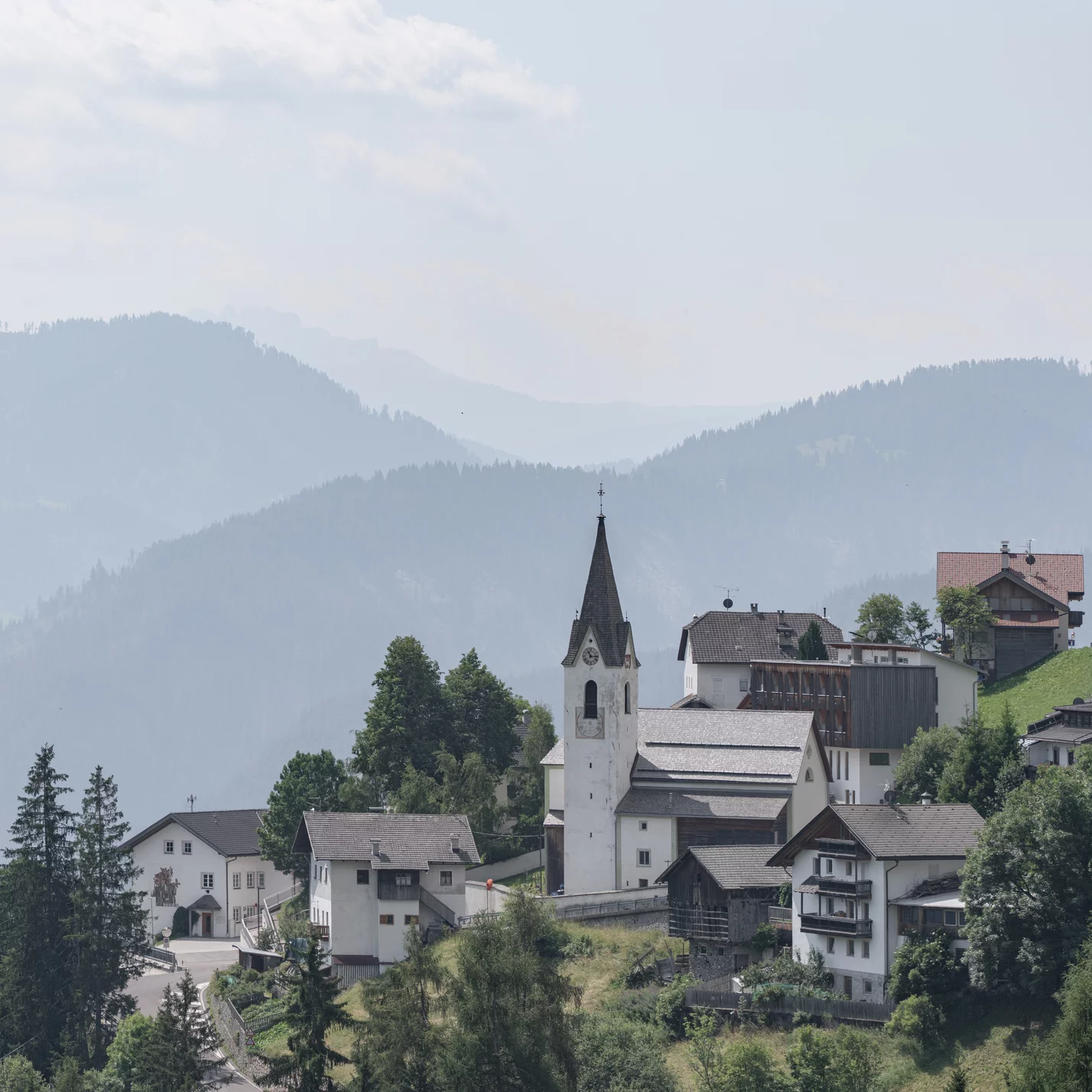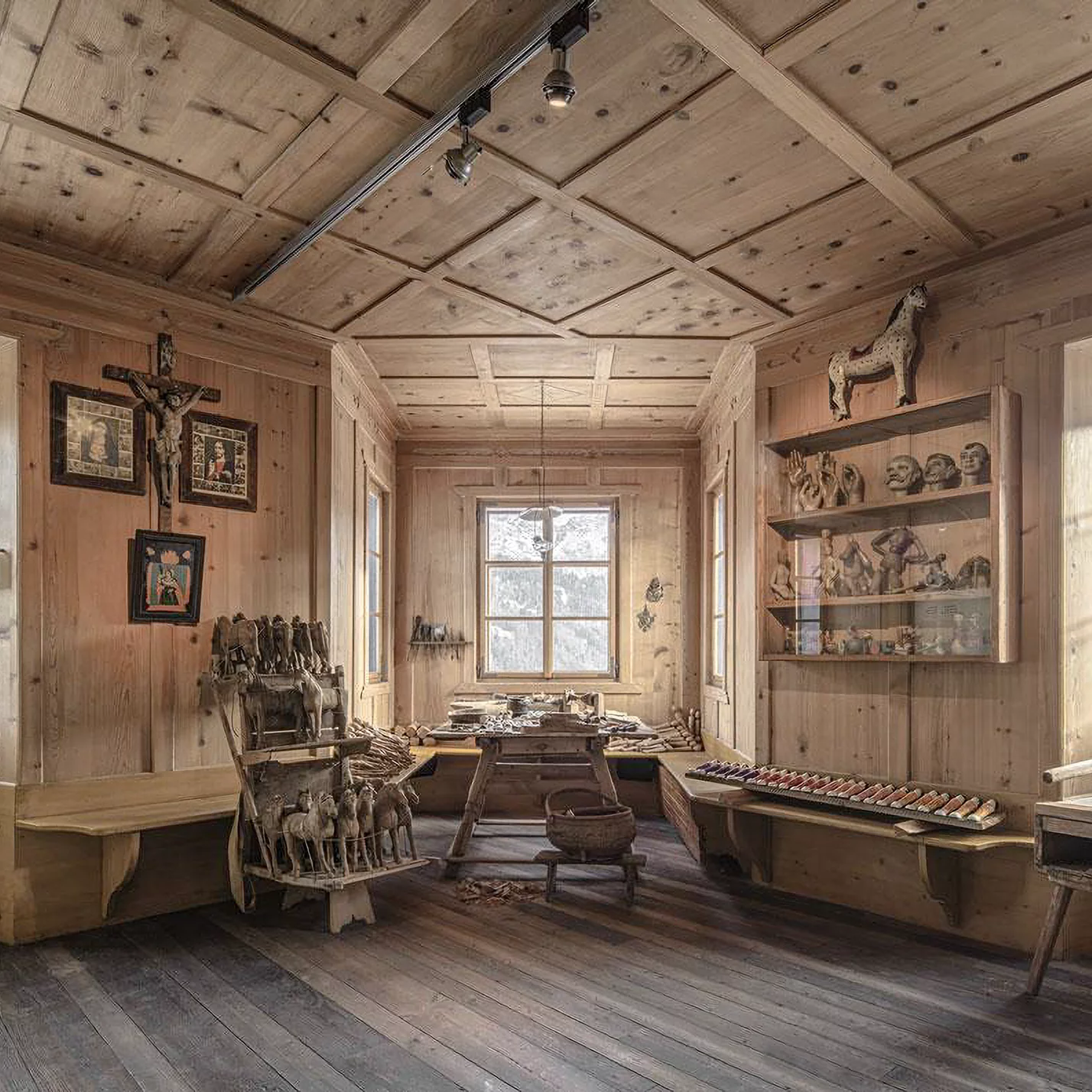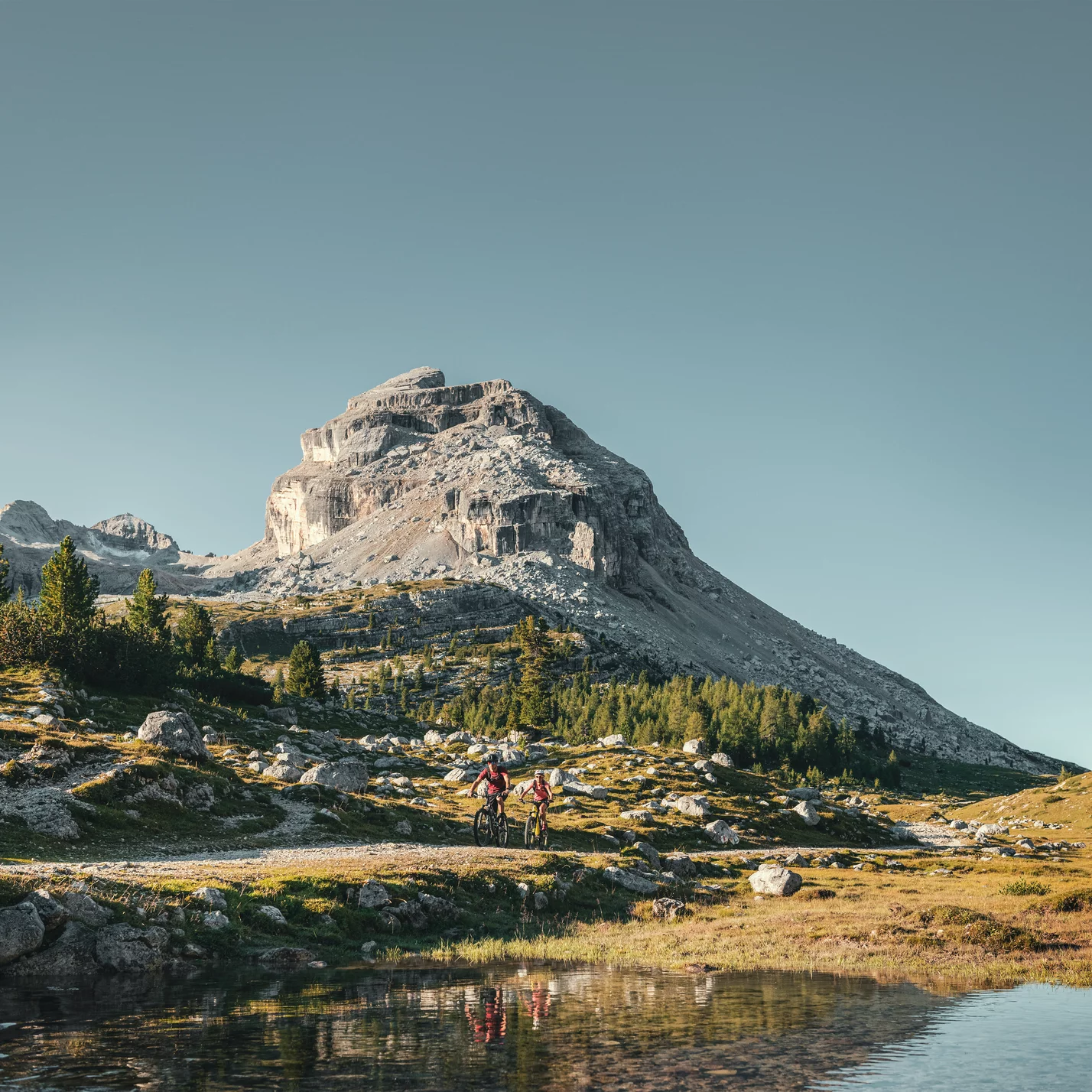
From 4 to 7 June 2026, San Vigilio di Marebbe will become a meeting place for musicians, families, accompanying guests and friends of the Steirische Ziehharmonika from across the Alpine region.
After 19 years, the World Championship returns to South Tyrol and will take place in Ladinia for the very first time. For our community, this is a great honour, but also a responsibility. An event of this kind is much more than a competition: it is an encounter between people, generations, languages and cultures.
At its heart are the joy of music, respect for tradition and the enthusiasm of those who play this instrument with skill and passion. In Ladinia in particular, the Steirische Ziehharmonika is deeply rooted. Many young people carry this musical culture forward with great dedication, showing that tradition remains alive when it is embraced by new generations.
We warmly welcome all participants and guests and wish them days filled with music, encounters, appreciation and genuine hospitality.


09:00 – 17:00 STEIRISCHE HARMONICA WORLD CHAMPIONSHIP FOR JUNIORS AND ADULTS
Competitions at the event hall, Sala Manifestazioni ……………………………………….
In the afternoon, an additional Category C of the Austrian National Championships may also take place, depending on the number of registrations.
15:00 – 18:00 AUSTRIAN NATIONAL CHAMPIONSHIPS
Category C2 at the middle school, Scora Mesana. Registration at the event hall!
20:00 CONCERT AT THE MUSIC PAVILION (Free admission)
A musical evening with the renowned Klemen Rošer Trio from Slovenia
and the Musiga Catarina Lanz brass band from San Vigilio.


Die Eintrittskarten für den Zugang zu den Räumen der Meisterschaften können direkt am Eingang der beiden Veranstaltungsorte erworben werden:
Veranstaltungssaal für die Weltmeisterschaften
Mittelschule St. Vigil für die Österreichischen Meisterschaften
Die Standorte der Säle sind in der untenstehenden Karte eingezeichnet.
Alternativ können die Eintrittskarten auch im Tourismusbüro erworben werden.
Alle Teilnehmerinnen und Teilnehmer der Meisterschaften haben freien Eintritt.
Die Abendveranstaltungen und Konzerte sind kostenlos zugänglich.
TAGESTICKETS
Erwachsene: 12,00 €
Kinder und Studierende: 6,00 €
Familienticket, 2 Erwachsene und 2 Kinder: 24,00 €
TICKET FÜR 2 FESTIVALTAGE
Erwachsene: 18,00 €
Kinder und Studierende: 9,00 €
Familienticket, 2 Erwachsene und 2 Kinder: 36,00 €
Mit jedem erworbenen persönlichen Ticket erhalten Sie einen Spring Special Gutschein, mit dem Sie kostenlosen Eintritt oder attraktive Ermäßigungen für Museen, geführte Wanderungen, den Eulenpark und viele weitere Aktivitäten in San Vigilio Dolomites und Umgebung erhalten.
Here you will find useful points of interest to help you find your way around during the event days.

From relaxing activities to adrenaline filled adventures, our destination offers a wide range of experiences to make your stay even more enjoyable. With the purchase of a ticket for any day of the World Championship, you will receive a voucher for the Spring Special, our spring activity offer.
The voucher allows you to take part in guided hikes and experiences either free of charge or at a greatly reduced price, as well as to access museums, the Zipline, the Owl Park and much more.
Discover the full list of offers on our website.
San Vigilio Dolomites is a living environment where nature, culture and community are closely connected. The villages lie in the heart of Ladinia, one of the oldest cultural regions in the Alps. Here, language, customs, music and a strong sense of belonging are not only part of history, but continue to shape people’s everyday lives.
The destination stands for a form of hospitality based on mindfulness, respect and genuine encounters. Those who arrive here do not enter an interchangeable holiday resort, but a community that has grown over time, with its own identity, strong associations, active families, committed businesses and a deep connection to its living environment.
A particularly important value is the balance between people and nature. Large parts of the area are protected and belong to a landscape that must be treated with care. This responsibility also shapes the destination’s understanding of development: it should not happen at the expense of the place, but in harmony with the local population, culture and nature.
For this reason, San Vigilio Dolomites sees hospitality as more than a tourism-related task. To host means to welcome people without losing one’s own identity. It means creating opportunities for encounter, making traditions visible and, at the same time, carefully preserving what makes this place special.
In this setting, the World Championship of the Steirische Ziehharmonika also finds its ideal framework: not merely as an event, but as a moment in which music, community and the values of a special destination become truly tangible.

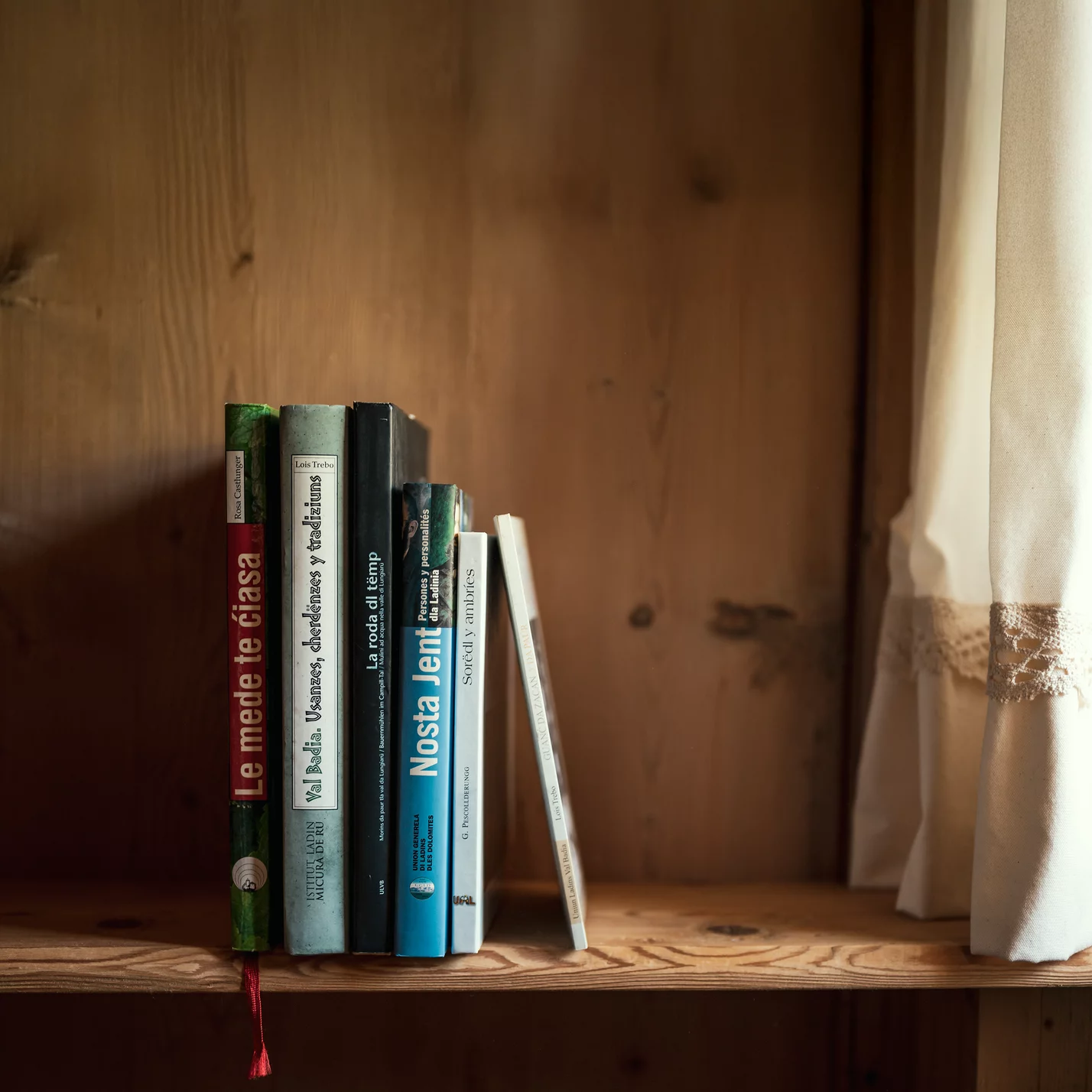
As guardians of a history and culture dating back more than two thousand years, the Ladins have accompanied the political, geographical and cultural evolution of the Dolomites. The Ladin valleys, a meeting point between the German speaking world, Italy and Mediterranean cultures, have developed a strong identity of their own.
The Ladin language belongs to the Rhaeto Romance group, together with Swiss Romansh and Friulian. It is spoken in several valleys across South Tyrol, Trentino and Veneto, including Val Badia and Val Gardena.
Despite political and administrative changes, Ladin culture has preserved its continuity, also thanks to the valley landscape, which has favoured the conservation of the language and its local variants. Today, Ladin is protected and used alongside Italian and German in administration, schools and everyday life.
Gastronomy is an integral part of Ladin identity. It is a cuisine of rural origin, linked to alpine pasture ingredients, preservation techniques and seasonality. Simple and nourishing, it was based on livestock products and on what the land provided: flour, potatoes, eggs and dairy products. These essential foods helped sustain the work in the fields.

The close relationship that the local population had to establish with the surrounding natural environment strongly influenced the very structure of the picturesque villages, scattered across valleys and sunny slopes.
The basic element of Ladin settlement is the “Vila”. This is a rural hamlet made up of several farmsteads located close to one another, a form of settlement that encouraged cooperation and the shared management of resources.
Each Vila had its own fields and at least one shared oven and fountain, around which the houses were arranged. These were largely self sufficient micro communities, where rural life found its centre.

Another fundamental element of Ladin culture, shared across all the valleys, is a strong tradition of storytelling, especially through legends.
The Rëgn de Fanes is the most emblematic cycle, as it takes the form of an epic, with origins, heroes, trials, betrayals and a final promise of return. For centuries, the saga was passed down orally. Elders told it to children, adding and changing elements in a continuous process of construction and transmission.
It was Karl Felix Wolff who made it “readable” for modern audiences. A journalist and scholar active between the late nineteenth and early twentieth centuries, Wolff collected and reworked many Dolomite traditions, helping to set down in written form the narrative heart of this extraordinary expression of creativity.

The Fanes Senes Braies Nature Park features a typical Dolomite landscape, with vast areas of great scientific interest due to their complex geomorphology. One of its key features is the Fanes and Senes plateaus, where karst phenomena are particularly evident.
This is the process by which water carves channels, fissures and caves into the limestone rock that makes up much of the plateau. In this terrain, almost resembling Swiss cheese, streams flowing down from the mountains can disappear underground and re emerge further down the valley only after many kilometres.
This environment is very rare and creates a unique biodiversity. Many animal and plant species have adapted to these special conditions. Ibexes, marmots, salamanders and edelweiss are just some of the park’s inhabitants that, with a little luck, you may encounter if you walk with care and respect.

The Puez Odle Nature Park lies between Passo delle Erbe in the north and Passo Gardena in the south. To the east, it extends as far as Val Badia, including Longiarù and Antermoia, while to the west it reaches the valleys of Funes and Gardena.
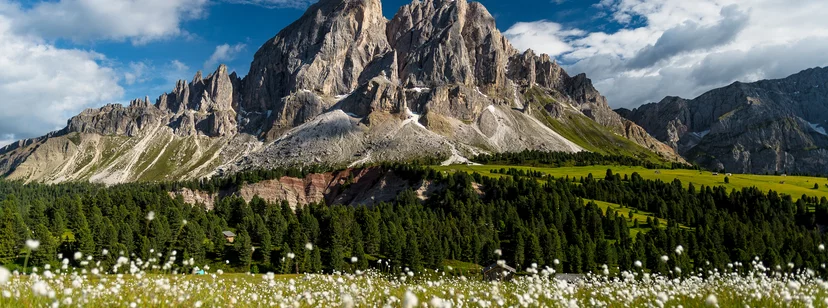
From a landscape perspective, it combines broad plateaus, such as Puez and Gardenaccia, with highly distinctive rock formations and iconic peaks such as Putia. Along the slopes of Putia in particular, the geological character of the Dolomites is perfectly visible.
If you look closely, you can recognise clear rock layers with different colours, each indicating different periods in the history of these mountains. It is no coincidence that the park is known as “The Geological Book of the Earth”.